3 Ways to Attach an Aluminum Fence at Your House
3 Ways to Attach an Aluminum Fence at Your House: Wall Mounts, Ground-Set Posts, and House-Mounted Posts
When an aluminum fence runs up to a house, garage, pool house, or other structure, one of the final decisions is how to terminate the fence.
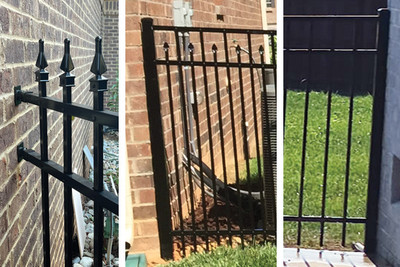
There are three common ways to finish an aluminum fence at a house:
- Attach the fence panel directly to the house using wall mounts.
- Set an aluminum fence post in the ground next to the house.
- Attach an aluminum fence post directly to the house and connect the fence panel to the post.
Each method can create an attractive, professional installation, but each has different advantages. The right choice depends on your home's construction, the fence layout, available space, and whether you want the fence attached directly to the structure.
Option 1: Attach the Aluminum Fence Directly to the House With Wall Mounts
Wall mounts are brackets that allow the horizontal rails of an aluminum fence panel to terminate directly against a house or other structure.
Instead of using an end post, the fence panel is cut to the required length and the rails are secured to the structure with wall mounts.
Advantages of Wall Mounts
Clean, streamlined appearance
Wall mounts provide one of the cleanest ways to terminate an aluminum fence at a house. Because there is no post between the panel and the structure, the fence appears to flow directly into the building.
No post hole beside the foundation
Digging a post hole immediately next to a house can sometimes be difficult or even impossible.
The home's footing or foundation may extend underground beyond the visible wall. You may also encounter drainage lines, utilities, gravel, concrete, or other obstacles.
Wall mounts eliminate the need to dig a post hole in this area.
Excellent for tight spaces
Sometimes there simply isn't enough room for a full-size fence post between the house and a sidewalk, patio, driveway, pool deck, retaining wall, or other obstruction.
Wall mounts require very little space and can be an excellent solution for these situations.
Fewer fence components
Since an end post isn't required, wall mounting can also reduce the number of components needed to complete the fence line.
What to Consider With Wall Mounts
The wall mounts are only as secure as the surface and fasteners they're attached to.
You should determine what is behind the exterior surface before drilling. Siding, trim, brick veneer, stone veneer, and similar materials shouldn't automatically be assumed to provide adequate structural support.
The correct anchors and installation method will depend on whether you're attaching to concrete, masonry, wood framing, or another material.
Any penetration through the exterior of a building should also be properly sealed to help prevent water intrusion.
Option 2: Set an Aluminum Fence Post in the Ground Next to the House
Another common method is to install an end post in the ground next to the house.
The post is installed in a properly sized post hole and secured with concrete. The aluminum fence panel then connects to the post just like the other sections of the fence.
Advantages of Setting a Post in the Ground
The fence remains completely independent of the house
This is one of the biggest advantages of using a ground-set post.
There is no need to drill into siding, brick, stone, stucco, or another exterior surface. The house and fence remain separate structures.
Traditional aluminum fence installation
A ground-set end post allows you to install the final fence section in essentially the same way as the rest of the fence.
This can make installation straightforward for a DIY homeowner who is already setting the other fence posts in concrete.
No penetrations through the house
Some homeowners simply don't want holes drilled into their home's exterior.
Using a ground-set post eliminates concerns about anchors, fasteners, waterproofing, or possible damage to the exterior finish.
Easier to remove or modify later
Because the fence isn't attached to the house, future repairs or renovations may be easier.
If siding, brick, stone, or another exterior finish needs work in the future, the fence isn't physically fastened to it.
What to Consider With a Ground-Set Post
The main consideration is whether there is enough room to properly dig the post hole.
A home's concrete footing may extend farther from the wall than expected, making it difficult to position a post as close to the house as you'd like.
Also consider the gap between the post and the house. You don't want to leave an unnecessarily large opening, especially when the fence is being used for pool safety, pets, children, or security.
Always follow applicable local fence and pool codes.
Option 3: Attach an Aluminum Fence Post Directly to the House
A third option combines some of the characteristics of the first two methods.
Instead of attaching the fence rails directly to the house with wall mounts, you can secure an aluminum end post vertically against the house and then connect the fence panel to that post.
The post essentially becomes the termination point for the fence without requiring a post hole beside the foundation.
Advantages of Attaching a Post to the House
Provides the appearance of a traditional fence post
Some homeowners prefer seeing a post at the end of every fence run.
Attaching a post to the house maintains that traditional aluminum fence appearance while eliminating the need to dig immediately beside the foundation.
Avoids digging near the foundation
Like wall mounts, a house-mounted post can be useful when a footing, concrete slab, utility, or other obstruction prevents you from digging a normal post hole.
Provides flexibility when attaching the fence panel
Once the post is securely installed, the fence panel can terminate at the post in much the same way as it would with a conventional end post.
This can make cutting and fitting the final aluminum fence panel easier in certain layouts.
Can help accommodate uneven wall surfaces
Depending on the application, a post can sometimes provide a cleaner vertical termination point when the home's exterior surface isn't perfectly aligned with the fence.
What to Consider When Attaching a Post to the House
Just like wall mounts, the post needs to be attached to a suitable structural surface using the proper fasteners.
Don't assume siding, trim, brick veneer, or stone veneer alone can support the connection.
The mounting method should account for the material behind the exterior finish, and any penetrations through the home's exterior should be properly sealed against moisture.
Which Method Should You Use?
All three methods can work well when they're appropriate for the particular installation.
Wall mounts are a great option when you want the cleanest possible appearance, have limited space, or don't want to dig beside the foundation.
A ground-set post is an excellent choice when you have enough room to dig and want to keep the aluminum fence completely independent of the house.
A post attached to the house can provide the traditional appearance and functionality of an end post while eliminating the need for a post hole next to the foundation.
The construction of the house may ultimately determine which method makes the most sense.
Be Careful When Attaching to Brick, Stone, Stucco, or Siding
An exterior wall can look solid without necessarily providing a suitable structural attachment point.
Brick and stone may be veneers rather than structural masonry. Vinyl siding, fiber cement siding, stucco, and other exterior finishes may also have framing, sheathing, insulation, or an air gap behind them.
Before installing wall mounts or attaching a post to the house, determine what you're actually fastening into.
Use fasteners and anchors appropriate for the structure and application. When you're uncertain about the construction of the wall, consult a qualified contractor before drilling.
What If a Gate Is Next to the House?
A gate requires additional consideration.
A swinging gate creates significantly different loads than a stationary fence panel. The gate's weight and repeated opening and closing place additional stress on the hinge side.
For this reason, we generally recommend using a properly installed gate post for the hinge side of an aluminum gate rather than treating it like a standard fence-panel termination.
Gate posts are typically heavier-duty than standard end or line posts and should be installed according to the manufacturer's recommendations.
Plan Your House Connection Before You Start Installing
Decide how your aluminum fence will terminate at the house before you begin setting posts.
Knowing whether you're using wall mounts, a ground-set post, or a house-mounted post will help you determine the correct post locations and panel lengths before installation begins.
It can also help you avoid ending up with an awkward gap between the house and fence.
Before digging, call 811 to have underground utilities located. Verify property lines and check local building codes, HOA requirements, setbacks, and pool barrier requirements when applicable.
Three Good Solutions for a Professional Aluminum Fence Installation
There's no single method that's right for every home.
If you want a minimal, streamlined connection, wall mounts may be the answer.
If you want to avoid attaching anything to your house, setting an end post in the ground is often the preferred method.
If digging beside the foundation isn't practical but you still want the look and functionality of a fence post, attaching an end post directly to the house may provide the solution.
Taking a little extra time to choose the correct termination method can make installation easier and give your finished aluminum fence a clean, professional appearance.
At OnlineFenceStore.com, we offer aluminum fence panels, posts, gates, wall mounts, and installation hardware for DIY and professional aluminum fence projects.
Not sure whether to use wall mounts, set a post, or attach a post to your house? Contact Online Fence Store and tell us about your installation. We'll help you determine which components make the most sense for your project.
Recent Posts
-
American-Made Aluminum Fence Pickets: 61% Thicker and Built to Last with AAMA 2604 Powder Coating
When it comes to aluminum fencing, not all fence pickets are created equal. While imported aluminum …Oct 23rd 2026 -
3 Ways to Attach an Aluminum Fence at Your House
3 Ways to Attach an Aluminum Fence at Your House: Wall Mounts, Ground-Set Posts, and House-Mounted P …Sep 16th 2026 -
The Advantages of Using Aluminum Gates With Wood Fencing
The Advantages of Using Aluminum Gates With Wood Fencing Wood fencing has long been a popular choice …May 18th 2026